Mount Prospect Epoxy Flooring installs polyaspartic floor coating systems in Mount Prospect, IL, serving surrounding cities including Prospect Heights, Wood Dale, Bensenville, Schiller Park and Deerfield. We have been grinding and coating concrete for more than 20 years, and polyaspartic has become one of the most useful tools we have: a fast-curing, color-stable coating that lets a garage go back into service sooner and holds its look in the sun.
Fast cure is the selling point, and it is also the risk. A product that sets in minutes leaves no time to fix poor prep, so every polyaspartic floor we install still starts with a ground slab, a moisture test and repaired cracks, the same as a slower epoxy system.
Your written proposal names the polyaspartic product line, the coats, any epoxy base, the broadcast and the finished thickness. That gives you a spec you can check the floor against, instead of a promise that it will be fast.
What Polyaspartic Coatings Do Well
Fast Cure and Short Downtime
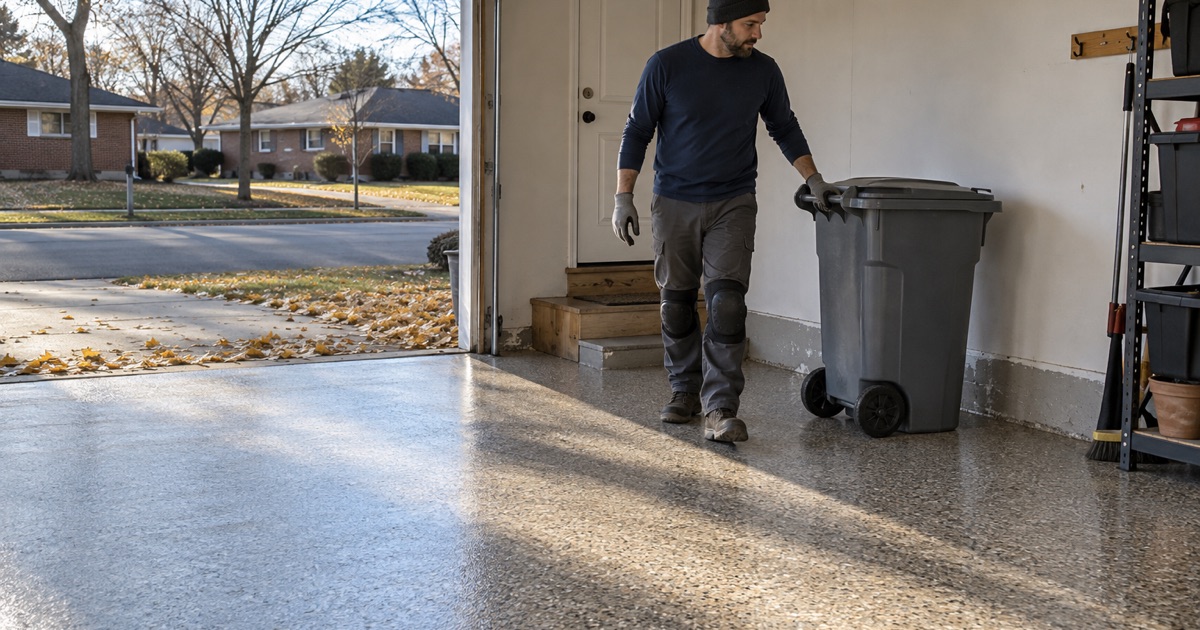
Polyaspartic resins cure much faster than standard epoxy, which shortens the time between coats and the time before a floor can take traffic. In a garage, that often means the car is back inside sooner, and in a business it means a shorter shutdown.
The tradeoff is a short working window. Our crews mix in small batches and work in sections, so the coating goes down evenly before it starts to set.
Color That Holds in Sunlight
Standard epoxy ambers under ultraviolet light, which shows first in the strip of floor in front of an open garage door. Polyaspartic is an aliphatic chemistry, so it holds its color and clarity in the same light.
That is why we use polyaspartic as the topcoat on most garage floors, even when the base is epoxy. The sun-facing part of the floor stays the same color as the rest.
Abrasion and Chemical Resistance
A polyaspartic topcoat resists scuffing from tires, boots and dragged equipment better than many epoxies. It also stands up to the salt brine, oil and fluids a garage floor sees. That resistance protects the flake and the base underneath, which is what keeps a garage floor looking right after several winters.
Polyaspartic Floors for Homes
Garage Floors Through Salt Season
Calcium chloride and rock salt come into the garage on tires all winter and sit in puddles where the car parks. A flake floor sealed under a polyaspartic topcoat keeps that brine on the surface, where it can be pushed out the door with a squeegee. We set the topcoat thickness and texture for a floor that will see slush for months, not a show garage that stays dry.
Basement Floors and Moisture
Most houses in Mount Prospect have a full or partial basement, and many basement slabs move moisture even when they look dry. A polyaspartic topcoat does not change that, so we test the slab with a calcium chloride kit or an in-situ relative humidity probe first.
Where the reading is high, we start with a moisture-mitigation primer under the polyaspartic system. Where water is actually coming in, the drain, the valve and the drying come before any floor.
Coating Through the Cold Months
Polyaspartic tolerates lower temperatures than many epoxies, which can stretch the coating season into late fall for an attached garage. That does not make winter coating safe everywhere.
We measure slab temperature and the dew point spread before every coat. A detached, unheated garage in January is still told to wait for warmer weather.
Polyaspartic Floors for Businesses
Short Shutdowns for Shops and Showrooms
A shop, showroom or office floor that cannot close for a week is a natural fit for polyaspartic. Fast cure lets us coat a section overnight or over a weekend and hand it back the next working day. We phase the floor around your hours and write the schedule into the proposal, so staff know which areas close and when.
Flex Buildings and Light Industrial Floors
Business parks such as Kensington Business Center hold flex buildings that mix office, showroom and warehouse space under one roof. Polyaspartic topcoats work well on the office and showroom side, where appearance and fast turnaround matter. On forklift lanes and heavy-load areas, we usually build a thicker epoxy or urethane system first and use polyaspartic only as the wear surface where it fits.
Where Polyaspartic Is Not the Answer
Polyaspartic is not the right coating for every floor. Areas with hot water washdowns, steam cleaning or harsh food-plant chemicals often need urethane cement, and a slab with serious moisture may need a mitigation system first. We would rather recommend a different system than install a fast floor in the wrong place.
How We Install a Polyaspartic System
Grinding, Not Etching
Every slab is opened with a diamond grinder or a shot blaster to the profile the coating maker calls for. Acid etching leaves sealer and weak paste behind, and a fast-curing coating will not forgive that. Dust is collected at the machine and never rinsed toward a floor drain or the street.
Repairs, Base and Broadcast
Cracks and spalls are filled and ground flush before any coating. Depending on the system, a base coat of epoxy or polyaspartic goes down next, followed by a vinyl flake or quartz broadcast for color and grip. The loose broadcast is scraped and vacuumed once the base sets, leaving a locked-in texture.
Topcoat and Return to Service
The clear polyaspartic topcoat goes on last, at the sheen and texture we agreed on. We then give you the written return-to-service time for foot traffic, vehicles and heavy items, based on the products used and the slab temperature that day.
Before we pack up, we walk the floor with you under good light and look at the edges, the drain area and the door threshold together. Any spot that needs touching up gets handled while the crew and the material are still on site.
Polyaspartic Versus Epoxy, Side by Side
Where Epoxy Still Wins
A 100% solids epoxy builds thickness in a single coat and wets into a ground slab well, which makes it an excellent base and primer. It is also the usual choice for moisture-mitigation primers and for filling small surface defects before a broadcast.
That is why many of our garage systems use an epoxy base under a polyaspartic topcoat. Each layer does the job its chemistry is best at.
Full Polyaspartic Systems
On some floors, especially where downtime has to be as short as possible, we build the whole system from polyaspartic, base through topcoat. That gives the fastest return to service and color stability through every layer.
It also demands the tightest prep and crew timing, because every layer sets quickly. We recommend it where the schedule truly calls for it rather than as a default.
Cost Compared With Epoxy
Polyaspartic materials generally cost more than standard epoxy, and full polyaspartic systems cost more than hybrid ones. The difference often comes back as a shorter shutdown, better color stability and a tougher wear surface. The proposal lists each layer and its product line, so you can see exactly where a polyaspartic upgrade adds to the price.
Paperwork, Warranty and Permits
Written Contracts for Home Jobs
Home jobs over the state threshold get a written contract and the Illinois Home Repair: Know Your Consumer Rights pamphlet before any grinding begins, as the state’s Home Repair and Remodeling Act requires.
Warranty Terms and Village Rules
We explain what the coating warranty excludes before the job is sold, starting with moisture coming up through the slab. Illinois has no state flooring license, so we confirm the village’s own registration, bond and insurance rules before booking, and we ask the Building Division about permits rather than assuming either answer.
- 20+ Years on Concrete
- Moisture Tested Before Pricing
- Written Itemized Proposals