
Mount Prospect Epoxy Flooring installs flake epoxy floors in Mount Prospect, IL, serving surrounding cities including Prospect Heights, Wood Dale, Bensenville, Schiller Park and Deerfield. After more than 20 years of coating concrete, flake remains the floor we recommend most for garages and basements, because it hides the flaws of an older slab, adds grip and stands up to the brine and grit that come in all winter.
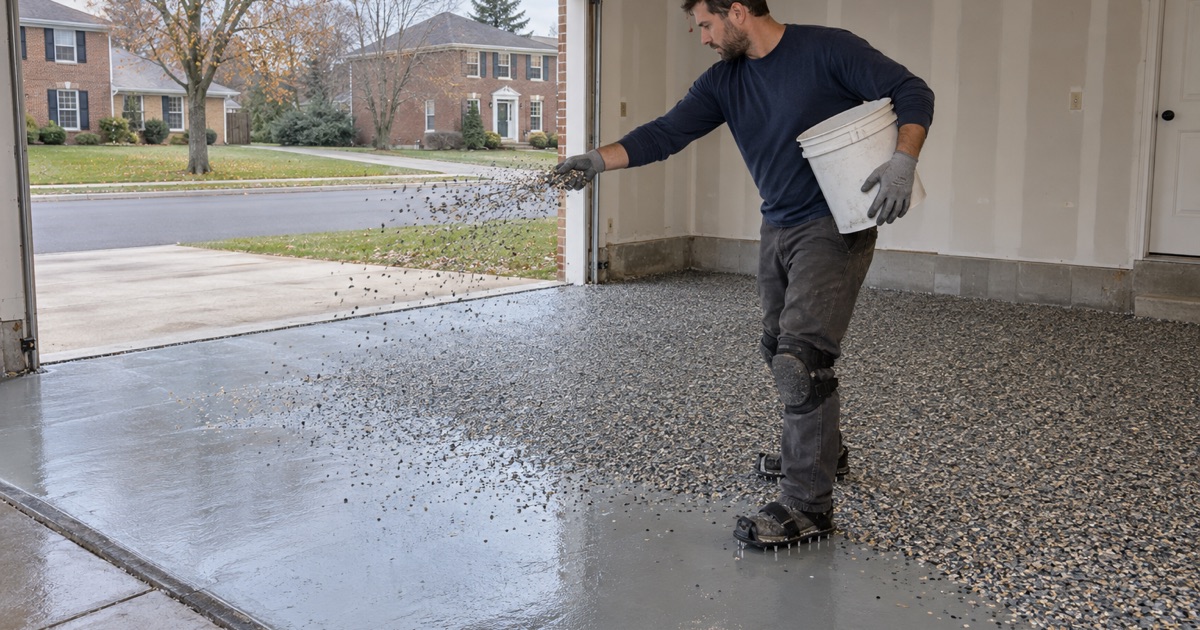
A flake floor is a resin base coat with colored vinyl chips broadcast into it while it is wet, then scraped, vacuumed and sealed under a clear topcoat. The result is a textured, multi-tone surface that does not show every speck of dust and tire mark the way a solid gloss floor does.
Your proposal lists the base product, the flake blend and chip size, the broadcast rate, the topcoat and the finished thickness. That gives you a specific floor to check the finished work against rather than a photo and a promise.
Choosing a Flake Blend
Color Blends
Flake comes in blends of several colors mixed together, from soft grays and tans to bold, high-contrast mixes. The blend sets the overall tone of the room, and lighter blends brighten a garage or basement with little natural light.
We bring sample boards to the estimate so you can see each blend against your own walls and lighting. Colors on a screen rarely match what lands on the floor.
Chip Size
Chip size changes how busy the floor looks. Small chips read as a fine, granite-like texture from the doorway, while larger chips give a bolder, more mottled look that hides more.
Chip size also affects the feel underfoot and how much topcoat it takes to seal the surface. We match it to how the floor is used.
Full or Partial Broadcast
A full broadcast covers the base coat completely and gives the most texture, the best concealment and a thicker system. A partial broadcast leaves the base color showing between chips for a lighter, speckled look.
For garages that see salt and heavy use, we usually recommend a full broadcast. Partial broadcasts suit lighter-use rooms where a cleaner look is wanted.
Why Flake Works on Older Slabs
Hiding Patches and Flaws
About 70 percent of local housing units were built between 1950 and 1979, so most slabs we coat carry decades of patches, cracks and stains. Even after grinding and repair, those slabs are not perfectly uniform.
A full flake broadcast hides repair lines and slight color differences in the concrete far better than a solid color or metallic finish. That makes it the most forgiving system for an older floor.
Grip for Snowmelt
The chips leave a textured surface that gives more grip than a smooth gloss floor, especially when snowmelt pools under a car. We can add a fine antislip aggregate to the topcoat where extra traction is needed. The texture is set so the floor still squeegees and mops clean, rather than trapping dirt.
Standing Up to Salt
Calcium chloride brine and rock salt ride in on tires all winter and sit where the car parks. Sealed under a chemical-resistant topcoat, a flake floor keeps that brine on the surface where it can be pushed out the door.
Bare concrete absorbs the same brine and scales over a few winters. The flake system is a sacrificial wear layer that protects the slab underneath.
How a Flake Floor Is Built
Grinding and Repair
Every flake floor starts with a diamond grinder or shot blaster opening the slab to the profile the base coat needs. Old sealer, paint and weak surface paste come off, and dust is vacuumed at the machine rather than washed toward a drain. Cracks and spalls are filled and ground flush, so the base coat lies flat and bonds across the whole floor.
Base Coat and Broadcast
A 100% solids epoxy or polyaspartic base goes down at the thickness in the proposal. While it is still wet, flake is broadcast by hand across the floor to the agreed coverage. When the base cures, the loose chips are scraped and vacuumed off, leaving the bonded flake locked in place.
Clear Topcoat
A clear polyaspartic topcoat seals the flake, sets the sheen and provides the chemical, abrasion and UV resistance. Its thickness controls how smooth or textured the finished floor feels. We walk the floor with you at the end and give the written return-to-service times for foot traffic and vehicles.
Flake Floors Beyond the Garage
Basements
Flake suits basement family rooms, gyms and laundry areas because it hides slab flaws and stays cleanable. Every basement slab is moisture tested first, and a mitigation primer is used where the reading calls for it.
Commercial Spaces
Showrooms, salons, break rooms and back-of-house areas use flake for a durable, low-maintenance floor that hides daily wear. In commercial work we phase installation around business hours and choose products inside the Illinois VOC limits for floor coatings.
Before the Job Starts
What Moves the Price
The square footage sets the base, and slab repair, old coating removal, a moisture-mitigation primer and the broadcast rate move it from there. A full broadcast uses more flake and more topcoat than a partial one, and the proposal shows both so you can compare.
Contracts and Warranty
Home jobs over the state threshold get a written contract and the Illinois consumer-rights pamphlet before any grinding starts. We also explain what the coating warranty excludes, starting with moisture, before the job is sold.
Moisture and Cure Conditions
Every flake floor gets a moisture test before the price is final, in a garage as well as a basement. The village garage standard puts a 5-inch slab over 4 inches of crushed stone, and its text and drawings show no vapor retarder under it, so ground moisture can reach the underside of the floor.
Cure times are set by slab temperature and the dew point spread at the surface, not by the calendar. An attached garage can often be coated into late fall, while a detached, unheated garage in January is told to wait for warmer weather rather than risk blush and a weak bond.
Village Registration and Permits
Illinois has no state flooring license, so we check the village’s own registration, bond and insurance rules before booking. We ask the Building Division whether a coating needs a permit rather than assuming either answer.
- 20+ Years on Concrete
- Moisture Tested Before Pricing
- Written Itemized Proposals