Mount Prospect Epoxy Flooring installs metallic epoxy floors in Mount Prospect, IL, serving surrounding cities including Prospect Heights, Wood Dale, Bensenville, Schiller Park and Deerfield. A metallic floor is the most decorative system we install, and in more than 20 years on concrete we have found that the look depends less on the pigment than on the slab underneath and the hands working the resin.
Metallic epoxy carries reflective pigment that moves as the resin is spread and worked, leaving a marbled, flowing, almost three-dimensional surface. Because the pattern forms on the floor, a flat, clean, properly ground slab matters even more here than it does under a flake system.
Your proposal names the primer, the metallic product line and colors, the clear topcoat and the finished thickness. That gives you a fixed spec to measure the floor against, even though the pattern itself is unique.
Where Metallic Epoxy Works
Finished Basements
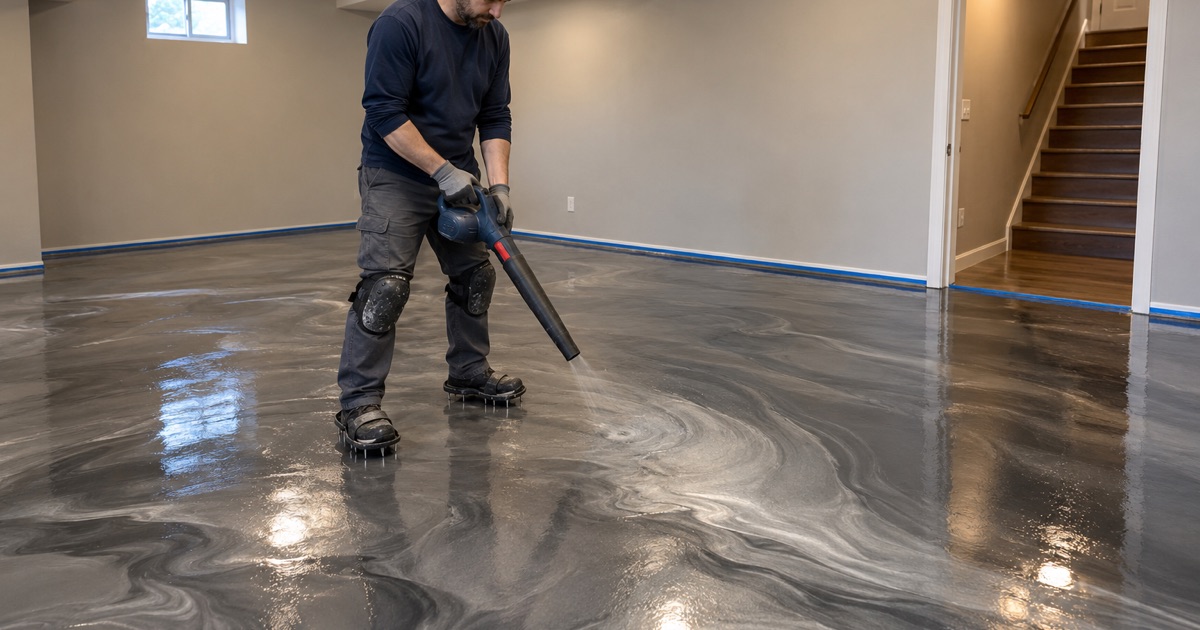
Most houses in Mount Prospect sit over a basement, and many owners want a family room or bar area that looks finished without carpet. A metallic floor gives a basement a polished, designed look that cleans up with a mop.
Basement slabs carry moisture, though, and a metallic floor shows any bubbling or lifting plainly. We test every basement slab first and use a moisture-mitigation primer when the reading calls for it.
Show Garages
Some garages are display spaces as much as parking spots. A metallic floor under a clear, abrasion-resistant topcoat makes a striking show garage floor.
It is less forgiving than flake in a daily-use garage. Salt film, tire marks and scratches show more on a smooth metallic surface, so we talk through how the garage is really used before recommending it.
Showrooms, Offices and Salons
Showrooms, offices and salons use metallic floors to set a look the moment a customer walks in. In a business park office or a storefront, a metallic floor reads as a design choice rather than a utility floor. We schedule commercial pours around business hours and plan the work in sections where the space cannot close.
Getting the Look Right
Colors and Movement
Metallic floors can be built from one color or several, with movement ranging from soft, cloudy swirls to bold veins and lava-like flows. The tools, the timing and the way the resin is worked all change the pattern. We agree on colors and the style of movement before the pour, using finished samples rather than a screen image.
Why No Two Floors Match
The metallic pigment shifts as the resin levels and cures, so the pattern is never repeated exactly. That variation is the appeal of the system.
What we control is the range: the colors, the amount of movement and the evenness across the room. A good installer guides the pattern instead of chasing it.
Light and Sheen
Metallic floors are usually finished in high gloss, which deepens the reflective effect and shows off the movement. Gloss also shows dust and footprints.
A satin topcoat softens the look and hides daily marks better. We help you choose based on the light in the room and how much traffic it sees.
Borders, Logos and Saw-Cut Lines
Borders, saw-cut lines and logos can frame a metallic design or define zones. In a business they mark walkways and brand the space, and at home they can set off a bar or game area. All layout is drawn with you before the pour.
What a Metallic Floor Needs Underneath
A Flat, Ground Slab
Every metallic floor starts with a diamond grinder or shot blaster opening the slab to the surface profile the primer needs. Acid etching does not remove old sealer or flatten the surface, and both problems show through a metallic finish. High spots are ground down and low spots filled, because the resin will pool in any dip and change the pattern there.
Repairs That Will Not Show Through
Cracks and spalls are filled and ground flat, and a pigmented base coat goes down to give the metallic layer a uniform background. Even so, a heavily patched slab can show faint lines through a metallic finish. Where the slab has many repairs or moving cracks, we will tell you if flake or a solid color would serve you better.
Moisture Testing
A moisture test is part of every metallic job, in a basement or a garage. Moisture coming up through the slab is the most common cause of coating failure, and on a metallic floor it shows as blisters in the most visible surface we install. Warranty terms on coatings almost always exclude moisture damage, and we explain that before the job is sold.
Protecting a Metallic Floor
UV-Stable Topcoats
Standard epoxy ambers under ultraviolet light, which would shift the colors of a metallic floor near windows and doors. We finish metallic floors with a clear UV-stable polyaspartic or aliphatic urethane topcoat to keep the colors true. That topcoat also takes the wear, so the metallic layer underneath stays intact.
Cleaning and Care
A metallic floor cleans with a dust mop and a pH-neutral cleaner. Grit is what dulls the topcoat, so mats at entries and regular dust mopping keep the shine. In a garage, squeegee salty meltwater out promptly so a salt film does not dull the finish.
Recoating Over Time
In high-traffic areas the clear topcoat may eventually show wear before the metallic layer does. A worn topcoat can be lightly abraded and recoated without disturbing the design underneath. We tell you what signs to watch for so the topcoat is renewed before traffic reaches the metallic layer.
Cure Conditions
Metallic resins are sensitive to temperature and humidity while they flow and cure. We check slab temperature and the dew point spread before the pour, because a cold or damp surface can cause blush and spoil the finish. In an unheated space during the cold months, we schedule the pour for warmer weather rather than risk it.
How a Metallic Pour Comes Together
Primer and Tinted Base
After grinding and repair, a primer seals the slab and a tinted base coat sets the background color for the metallic layer. The base color matters, because thin areas of the metallic coat let it show through and change the final tone. We choose the base with the metallic colors in mind, often a shade darker or lighter to deepen the movement.
The Metallic Coat
The metallic resin is mixed in measured batches and poured and spread across the floor in a planned sequence. Rollers, trowels, brushes and sometimes solvent sprays are used to create the movement agreed on.
The crew works wet edge to wet edge so there are no lap lines between batches. On a large room that means several installers working at once on a set pattern.
Clear Topcoat and Final Walk
Once the metallic layer cures, a clear topcoat goes on at the sheen we agreed on. Before we leave, we walk the floor with you in good light and go over cleaning, mats and the return-to-service time.
Paperwork and Planning
What Moves the Price
Metallic floors cost more than flake or solid color systems because of the material, the extra flattening of the slab and the crew time the pour takes. The number of colors, the size of the room, the repairs and any borders or logos are the other drivers. Every layer is itemized in the proposal, so you can see what the design adds over a standard floor.
Contracts and Village Rules
Home jobs over the state threshold get a written contract and the Illinois consumer-rights pamphlet for home repair before any grinding starts. Illinois has no state flooring license, so we confirm the village’s own registration, bond and insurance rules before booking, and we ask the Building Division about permits rather than assuming either answer.
- 20+ Years on Concrete
- Moisture Tested Before Pricing
- Written Itemized Proposals