How an Epoxy Garage Floor Job Runs
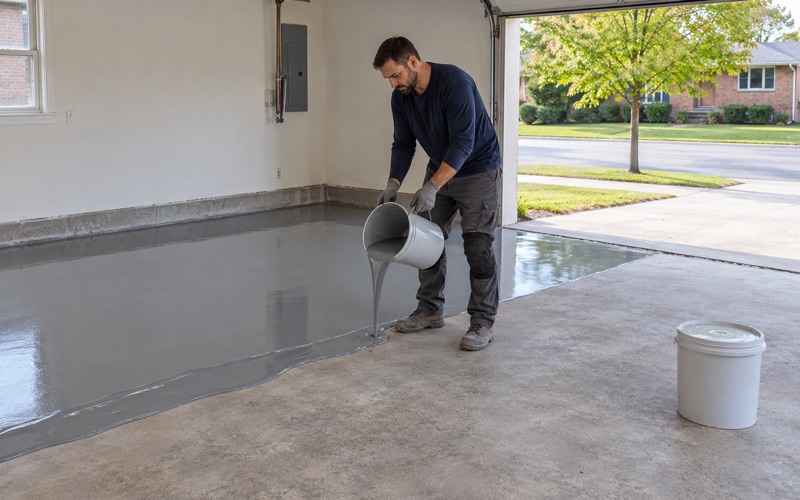
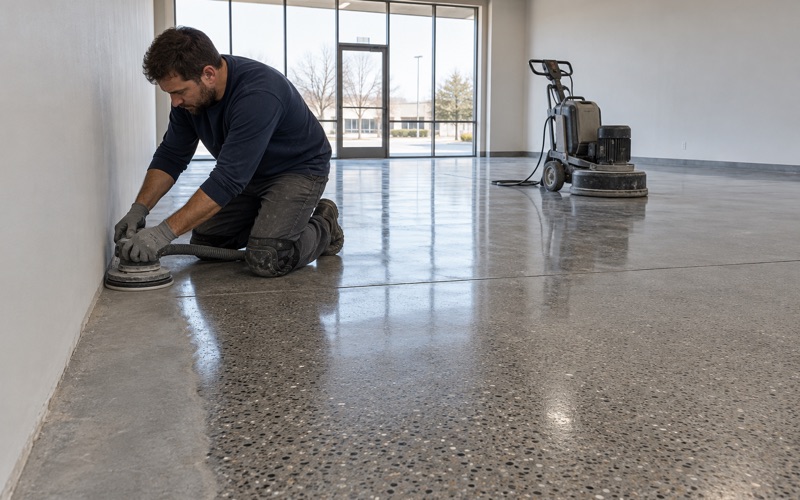
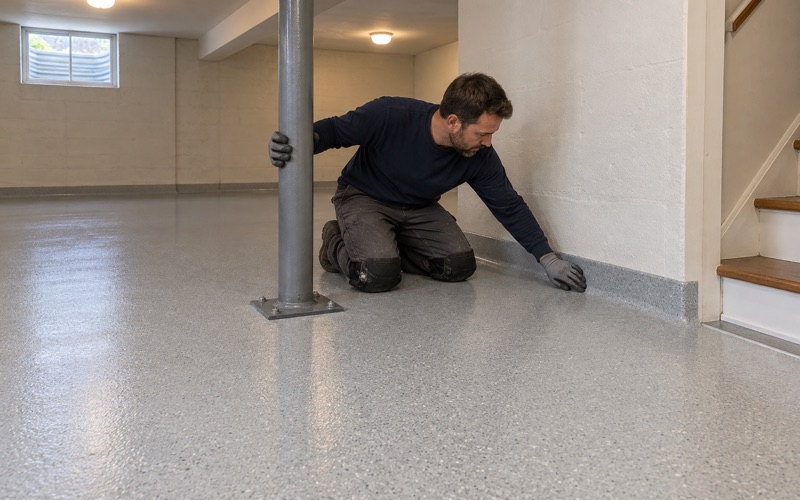
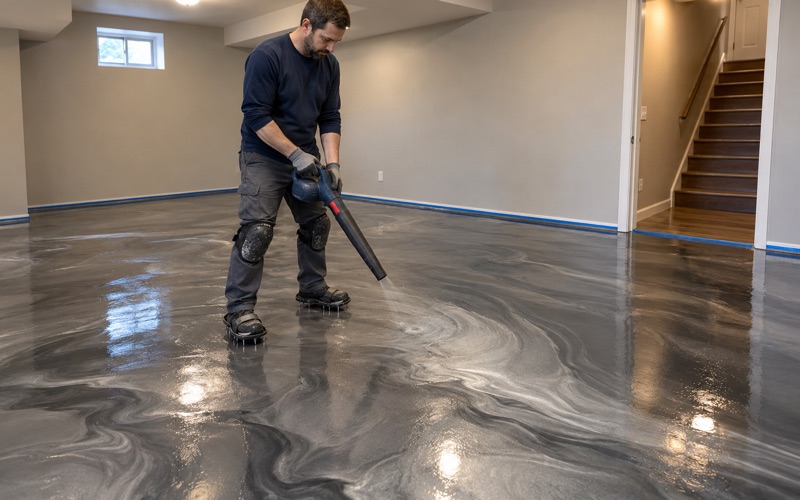
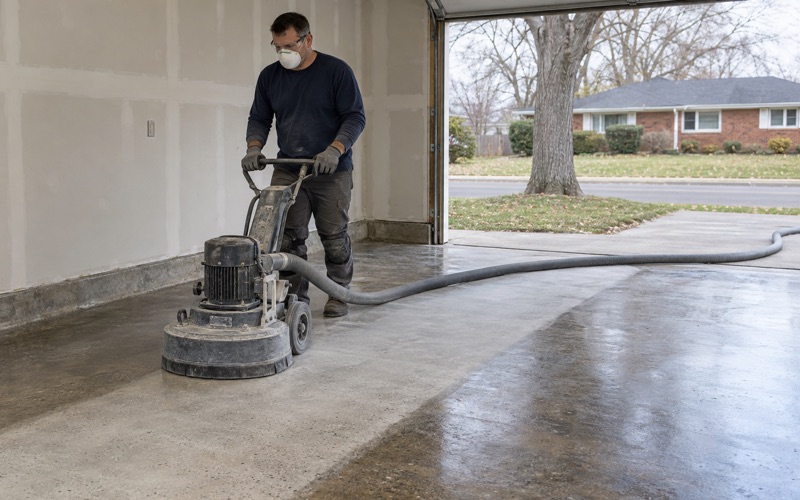
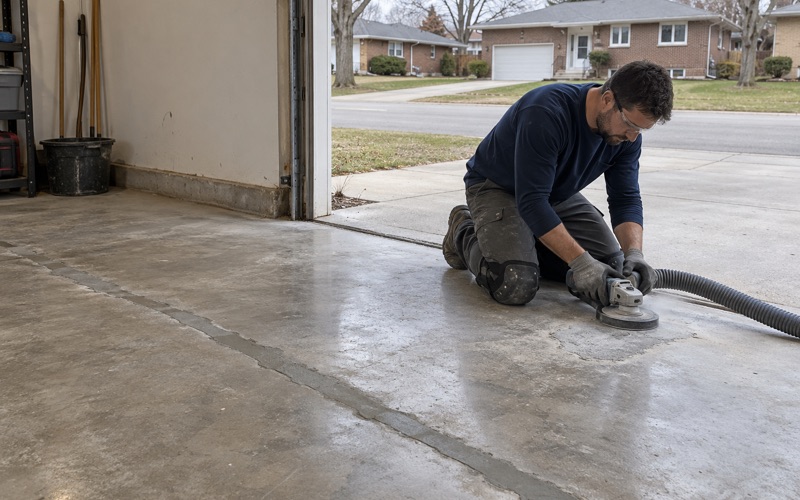
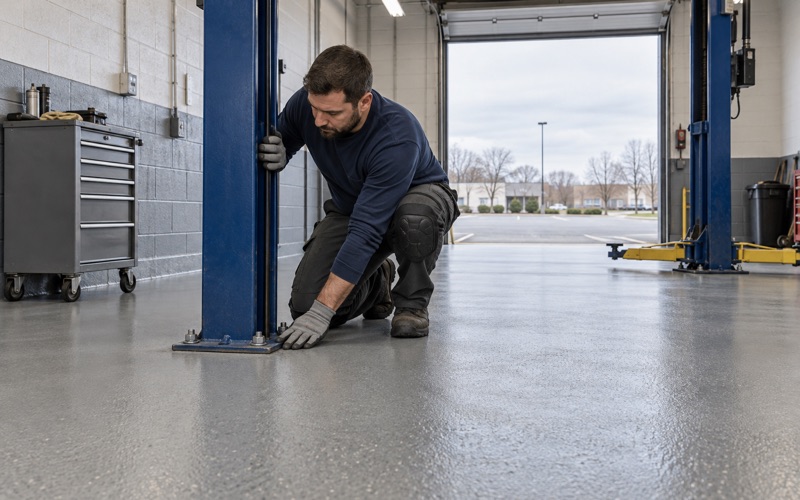
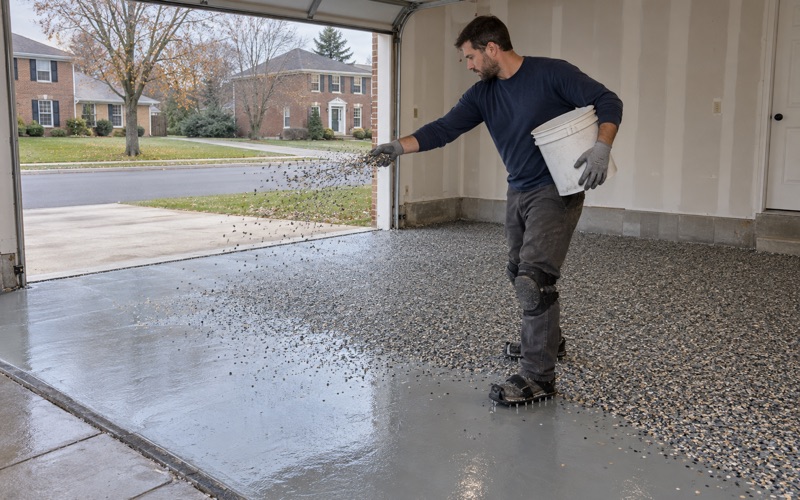
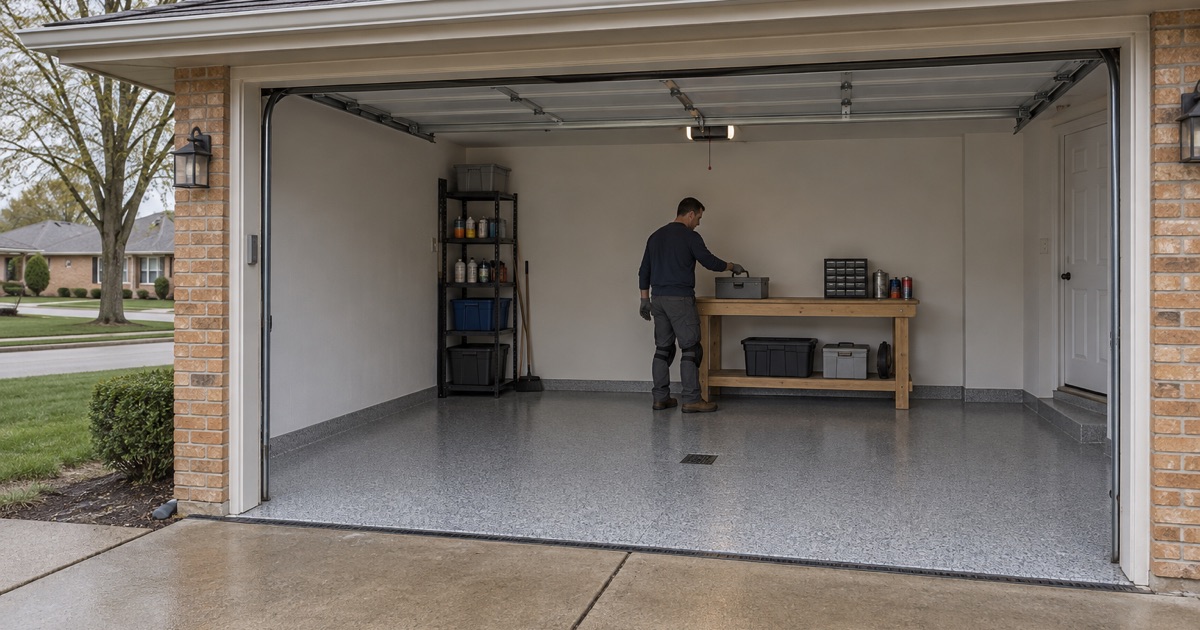
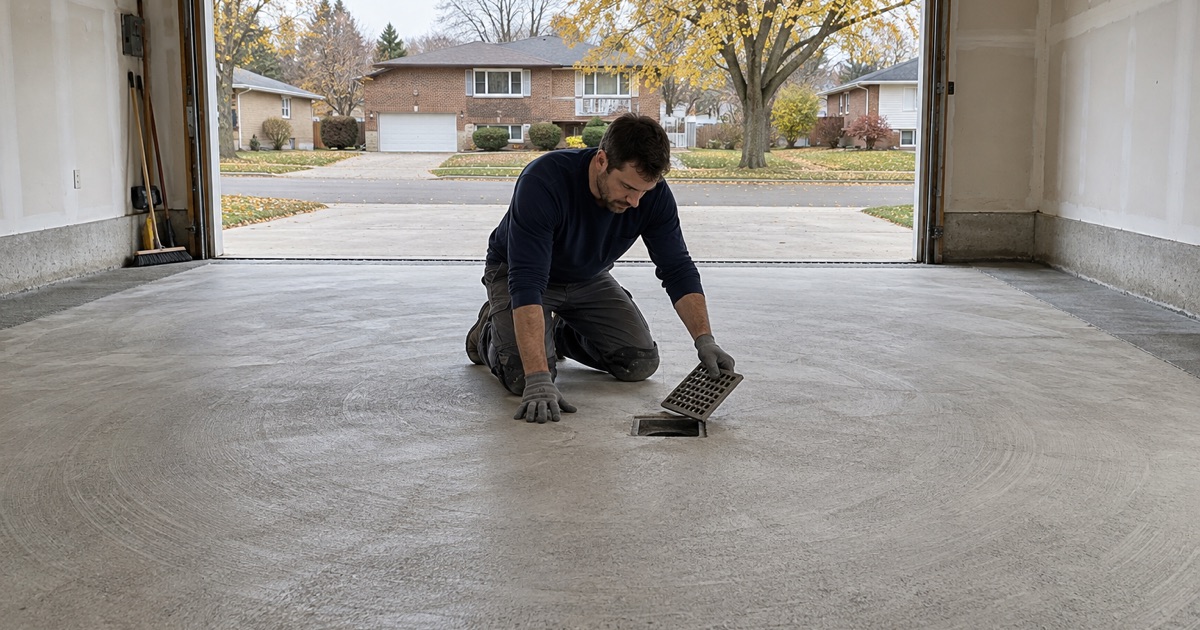
A garage job starts with a walk of the slab, a moisture test and a map of every crack, spall and old coating. Then comes grinding with dust collection, repairs, the base coat, the broadcast and the topcoat, followed by a walk-through and the stated cure time before you park, so you know what each day of the job is for.
Most two-car garages take one to three working days from first grind to final coat. The number moves with the amount of repair the slab needs and the system you choose.
Grinding Off Sealer and Paint First
A garage slab that was sealed or painted years ago will not let a new coating reach the concrete. Anything rolled over that old layer can only hold as well as the old layer does, and when the old layer lets go the new coating goes with it in sheets.
We grind or shot blast every slab down to clean, open concrete before any primer goes down. That profile is what a 100% solids epoxy needs to grip, and it is the one step no topcoat can make up for later.
Moisture Testing a Garage Slab Over Crushed Stone
Mount Prospect’s garage floor standard calls for a minimum 5-inch concrete slab over at least 4 inches of crushed stone, and the village text and drawings show no vapor retarder under it. That means ground moisture can reach the underside of a garage floor, so we test before quoting rather than assuming a garage slab is dry because it is not a basement.
A high reading points us toward a moisture-mitigation primer or a different system. A normal one lets us build the standard floor with confidence.
What Brine and Rock Salt Do to a Bare Slab
Calcium chloride brine and rock salt ride into the garage on tires and pool where the car sits. On bare concrete that salty meltwater soaks in, freezes and thaws, and slowly scales and pits the surface, which is why so many older garage floors show a rough, flaking patch right under the wheels.
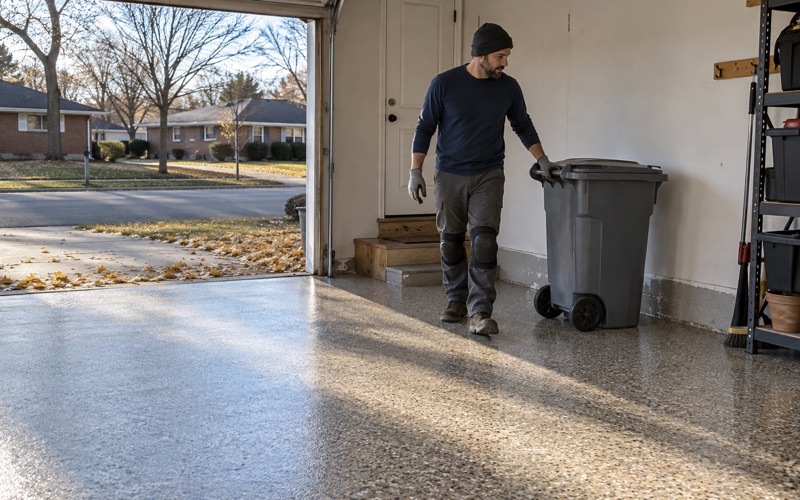
A sealed, broadcast coating keeps that brine on top where it can be squeegeed out the door. The chemical-resistant topcoat is chosen for exactly that exposure.
Coating a Garage in Cold Weather
Epoxy and polyaspartic resins cure by chemistry that slows down in the cold, and a cold slab can also sit near the dew point and collect a film of moisture. Coating into those conditions invites amine blush, a soft cure and poor adhesion.
An attached garage that shares a heated house wall can often be coated through the shoulder season. A detached, unheated garage in January usually cannot, and we would rather book you for spring than install a floor that fails.
Detached Garages and Keeping the Driveway Open
In a county assessor sample, roughly a third of the village’s garages are detached buildings, and many sit at the end of a long driveway. We stage the grinder, dust collector and material so the driveway stays usable where it can, and we tell you up front which days the garage itself will be closed. Detached garages also run colder than attached ones, so the cure schedule on a detached floor is set by its own slab temperature.
Store-Bought Kits Compared With a Professional Floor
A store-bought epoxy kit is a thin, water-based coating applied over an acid-etched slab. It can look good for a season, but it has little film thickness and an etch that never fully removes old sealer, so hot tire pickup and peeling are common.
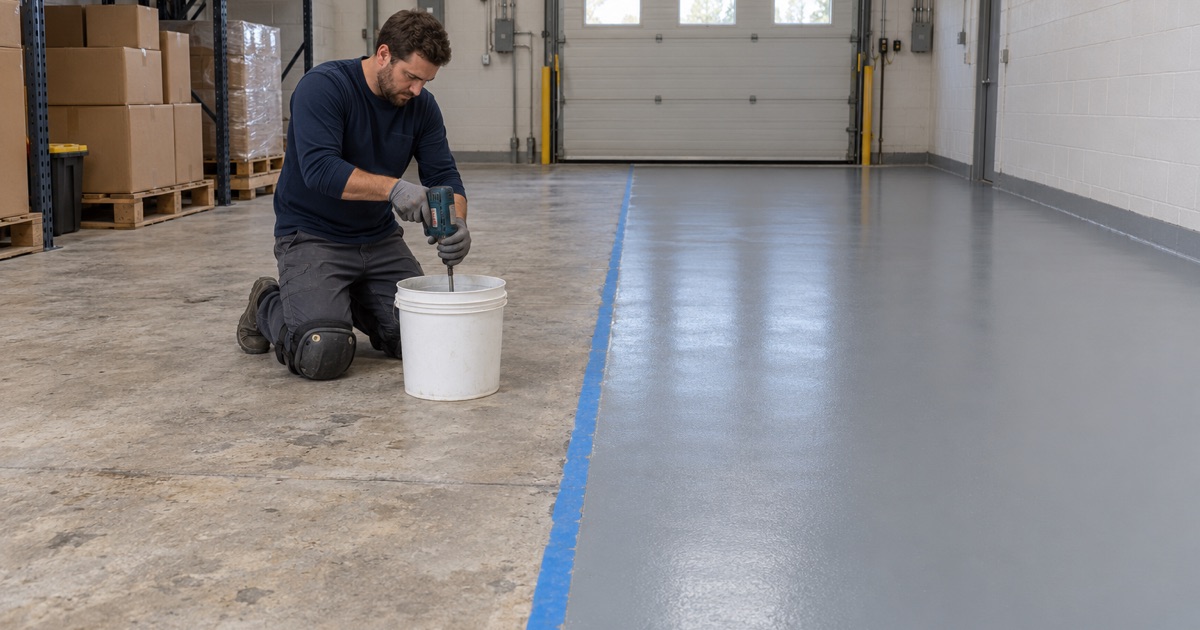
A professional floor is ground, repaired and built up in multiple coats of 100% solids epoxy and polyaspartic. The difference shows up in the second winter, not the first week.
What an Epoxy Garage Floor Costs
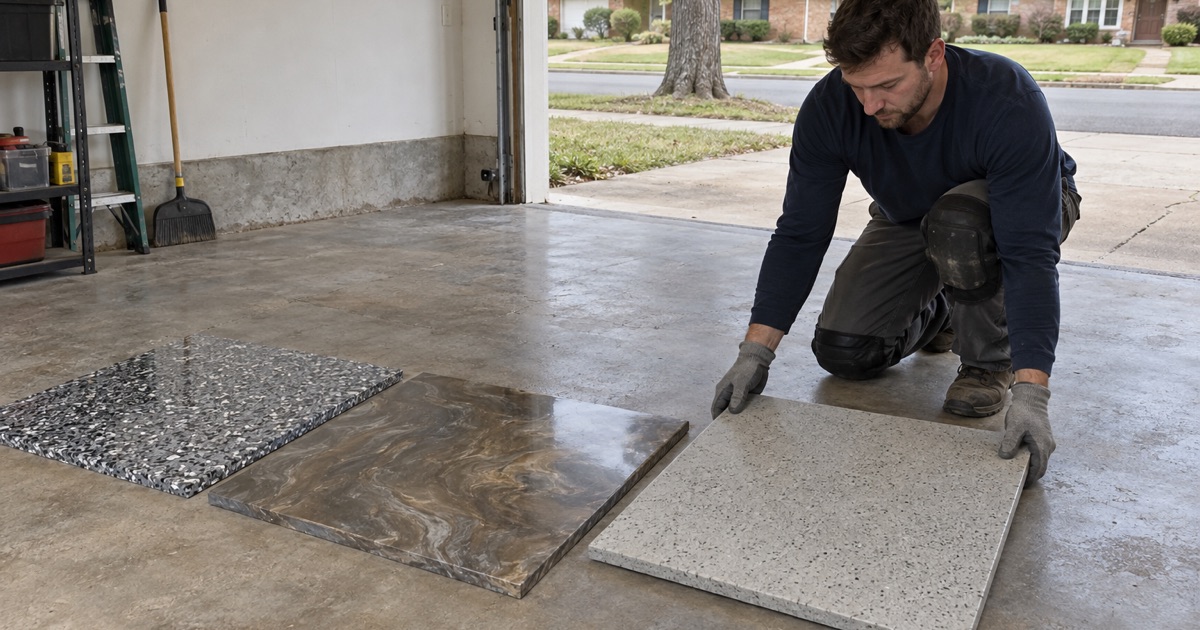
The price of an epoxy garage floor depends on the measured square footage, the amount of grinding and old coating removal, the crack and spall repair, the system and the broadcast. A full flake broadcast with a polyaspartic topcoat costs more than a solid color floor, and a slab that needs a moisture-mitigation primer adds a line of its own.
We give a fixed price only after we have seen and tested the slab. A number given over the phone without that visit is a guess.
What a Coating Warranty Leaves Out
Nearly every coating warranty excludes failures caused by moisture coming up through the slab. Many also exclude damage from impact, hot tire pickup on certain systems, and chemical spills left to sit.
We walk through those exclusions before the job is sold, starting with moisture. That way the warranty you sign means what you think it means.